
In outdoor advertising, visibility is power. Brands want billboards that are taller, larger, and clearly visible from long distances. However, achieving this visibility introduces complex technical risks. The interaction of wind load, height & visibility: engineering challenges in billboard manufacturing defines how safe, durable, and compliant a billboard structure truly is. Structural engineering ensures that visibility goals never compromise public safety.
This article explains how wind forces, structural height, and visibility requirements create engineering challenges—and how billboard manufacturers address them.
Why Engineering Challenges Are Critical in Billboard Manufacturing
Billboards function as permanent outdoor structures. They face continuous exposure to wind, rain, temperature variation, and vibration from traffic. At the same time, advertisers demand elevated placements for unobstructed views.
Therefore, engineering decisions must balance visual impact with structural stability. Without proper engineering, high-visibility hoardings can become structural liabilities.
Wind Load: The Biggest Engineering Challenge
Understanding Wind Load on Billboards
Wind load is the pressure exerted by moving air on a billboard’s surface. As billboard height and display area increase, wind force rises significantly. Consequently, wind load becomes the primary design constraint in billboard manufacturing.
Engineers evaluate:
-
Local wind speed zones
-
Height above ground level
-
Surface area of the display
-
Terrain exposure (open highway or dense urban zone)
As a result, every billboard structure is uniquely engineered for its environment.
How Wind Load Influences Structural Design
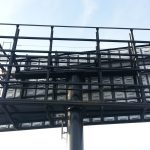
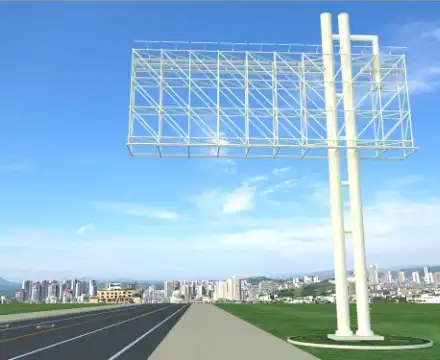
Higher wind load requires stronger columns, thicker steel sections, and advanced bracing systems. In many cases, engineers introduce truss frameworks to distribute wind pressure evenly.
Additionally, design solutions such as perforated panels or open-back structures reduce wind resistance. Therefore, wind load is managed without sacrificing visibility.
Height: Visibility Advantage with Structural Complexity
Why Height Matters in Outdoor Advertising
Height improves sightlines. Tall billboards rise above trees, buildings, and flyovers, allowing longer viewing distances and better recall. As a result, premium locations often demand maximum permissible height.
However, structural stress increases exponentially with height. Wind velocity also rises at higher elevations. Therefore, taller hoardings require significantly stronger engineering solutions.
Engineering Challenges of Tall Billboard Structures
With increased height:
-
Bending forces at the base multiply
-
Foundation size must increase
-
Structural fatigue risk rises
Consequently, engineers redesign column profiles and foundations to counter overturning forces. Height limitations imposed by authorities further influence final designs.
Visibility Optimization Without Excessive Height
Engineering Smarter Visibility Solutions
Visibility does not depend only on height. Engineers optimize billboard orientation, angle, and positioning based on traffic flow and viewing distance.
As a result, brands achieve strong visibility without unnecessary height increases. This approach reduces wind exposure while maintaining advertising effectiveness.
Structural Design Techniques to Balance Wind, Height & Visibility
To manage these engineering challenges, manufacturers use:
-
Tapered or stepped columns for load efficiency
-
Cross-bracing systems for lateral stability
-
Lightweight materials to reduce dead load
Therefore, structural strength improves without excessive material usage.
Foundation Engineering Under Wind and Height Stress
Why Foundations Carry the Real Risk
Wind and height-related forces ultimately transfer to the foundation. Engineers analyze soil bearing capacity, groundwater levels, and settlement risks before finalizing foundation design.
For tall hoardings, reinforced concrete foundations with deep anchoring systems are essential. As a result, structures resist overturning during storms and extreme weather.
Urban vs Highway Engineering Challenges
Highway Billboards
Highway hoardings face open wind conditions with minimal obstruction. Therefore, wind load calculations are conservative, and structures are heavily reinforced.
Urban Billboards
Urban billboards experience turbulent wind due to surrounding buildings. Consequently, engineers must account for unpredictable wind patterns while optimizing visibility in cluttered skylines.
Material Selection Driven by Wind and Height Requirements
Material choice directly impacts how structures handle wind and height stress. Structural steel and galvanized steel offer high strength and durability. Meanwhile, lighter components reduce overall load and improve stability.
Therefore, material selection is always integrated into wind load and height calculations.
Conclusion
The relationship between wind load, height & visibility: engineering challenges in billboard manufacturing defines the safety and success of outdoor advertising structures. While advertisers seek maximum visibility, engineering ensures that every billboard remains stable, compliant, and long-lasting. Through accurate wind analysis, optimized height planning, and intelligent structural design, manufacturers deliver hoardings that stand tall without risk.
In modern outdoor advertising, visibility may attract attention—but engineering keeps it standing.