
Digital Out-of-Home (DOOH) advertising has evolved rapidly over the past decade. Screens are brighter, locations are smarter, and content is more dynamic. However, despite these advancements, many standard DOOH screens still struggle with one critical challenge—attention saturation. This is precisely why 3D illusion displays are emerging as a superior alternative, consistently delivering higher attention, longer dwell time, and stronger brand recall than traditional DOOH formats.
In this article, we explore why 3D illusion displays outperform standard DOOH screens and how they are reshaping audience engagement in urban environments.
The Attention Problem with Standard DOOH Screens
Standard DOOH screens rely on motion graphics, videos, or static creatives displayed on flat surfaces. While they are effective for reach and frequency, audiences have gradually become conditioned to them. As a result, people often register these screens subconsciously without actively engaging.
Moreover, urban environments are already filled with visual noise—traffic signals, storefronts, smartphones, and other media. Consequently, flat DOOH screens struggle to interrupt routine visual behavior.
What Makes 3D Illusion Displays Different?
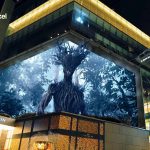
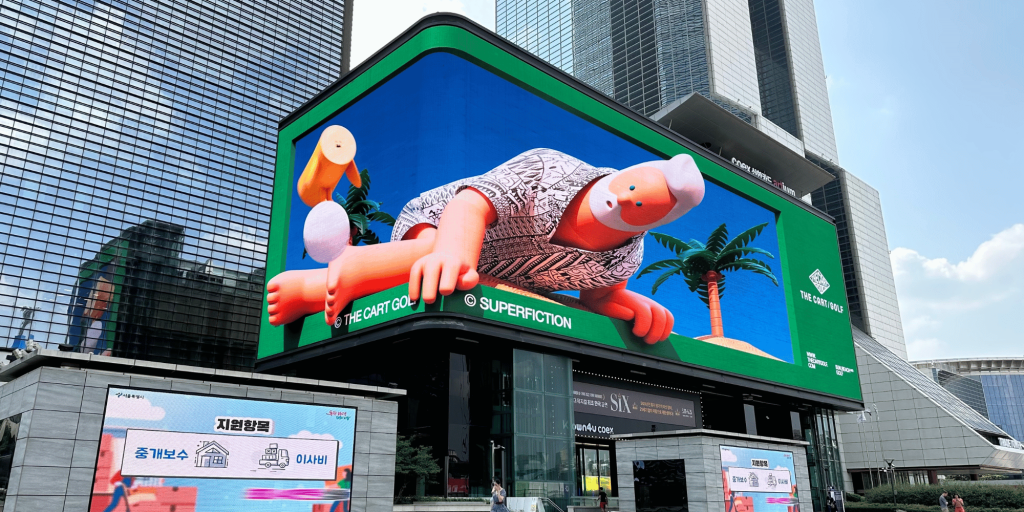
3D illusion displays, often powered by anamorphic content, create the perception of depth, movement, and realism on flat LED screens. Instead of appearing confined within the screen, objects seem to extend outward, float, or interact with the surrounding architecture.
Because the human brain is wired to notice spatial anomalies, these illusions immediately stand out. Therefore, attention is captured instinctively rather than consciously.
Psychological Reasons 3D Illusion Displays Command Attention
1. Depth Triggers Natural Human Curiosity
Human vision evolved to detect depth and motion for survival. When a display appears to break physical boundaries, the brain pauses to process what it is seeing. As a result, viewers instinctively stop, stare, and reassess.
Standard DOOH content rarely triggers this response because it behaves exactly as expected.
2. Pattern Disruption in Familiar Environments
People commute through the same routes daily. Over time, the environment becomes predictable. However, a 3D illusion display disrupts this familiarity by making a building appear alive or transformed.
Because of this disruption, the content feels new even in a familiar location. Consequently, attention levels increase significantly.
Visual Impact: 3D Illusion vs Standard DOOH
Screen Interaction and Spatial Engagement
Standard DOOH screens display content on the screen. In contrast, 3D illusion displays make content appear to exist beyond the screen.
Objects may:
-
Extend past screen edges
-
Wrap around corners
-
Appear to occupy real-world space
This spatial interaction makes the display feel immersive rather than observational.
Dwell Time and Viewing Duration
Since viewers need a few extra seconds to understand the illusion, dwell time increases naturally. In many cases, people stop walking, pull out their phones, and record the moment. Therefore, attention is not only captured but sustained.
Social Amplification Multiplies Attention Further
Another major advantage of 3D illusion displays is their social media ripple effect. While standard DOOH campaigns often end at physical exposure, 3D illusion content frequently travels online.
People actively:
-
Record videos
-
Share Reels and Shorts
-
Tag locations and brands
As a result, one physical screen generates both offline attention and online engagement. This dual-layer visibility dramatically increases overall campaign impact.
Brand Perception: Innovation vs Familiarity
Attention is not just about visibility; it is also about perception. Brands using 3D illusion are automatically associated with innovation, creativity, and premium positioning.
In contrast, standard DOOH screens, although effective, often feel routine. Therefore, 3D illusion help brands stand apart without increasing screen clutter.
Performance Metrics Where 3D Illusion Displays Win
Compared to standard DOOH screens, 3D displays consistently show:
-
Higher eye-tracking fixation
-
Longer average view duration
-
Increased recall rates
-
Higher organic social mentions
Because attention quality improves, even shorter campaigns can deliver stronger results.
When Should Brands Choose 3D Illusion Displays?
3D illusion displays are particularly effective for:
-
Product launches
-
Brand repositioning campaigns
-
Festive or event-led promotions
-
Premium or tech-focused brands
While they require more planning and creative precision, the attention payoff often justifies the investment.
The Future of High-Attention DOOH Advertising
As cities become more visually saturated, attention will become the most valuable currency in outdoor advertising. Flat screens alone will no longer be enough. Instead, formats that surprise, immerse, and emotionally engage will lead the future.
3D illusion displays represent this shift perfectly. They do not just deliver impressions—they create moments.
Conclusion: Attention Is Earned, Not Bought
Standard DOOH screens buy visibility. 3D illusion displays earn attention.
By leveraging depth, perspective, and spatial storytelling, these displays align with how humans naturally see and react to the world. As a result, they outperform traditional formats in attention, engagement, and memorability.
For brands looking to stand out in crowded urban landscapes, 3D illusion displays are no longer optional—they are the next competitive advantage.