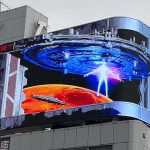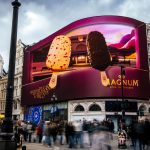

Anamorphic and 3D visual campaigns have transformed how brands capture attention in outdoor environments. However, the real engine behind their scalability is Digital Out-of-Home (DOOH) screens. Unlike traditional static hoardings, DOOH screens combine technology, flexibility, and premium infrastructure. As a result, they enable brands to deploy complex 3D anamorphic visuals across cities with consistency and impact. In India’s fast-evolving urban landscape, DOOH has become the foundation for taking anamorphic creativity from isolated stunts to scalable media strategies.
Understanding DOOH Screens in the Indian OOH Ecosystem
DOOH screens are digital LED or LCD displays installed across high-footfall urban locations such as junctions, malls, airports, office districts, and transit corridors. These screens support dynamic content delivery, remote updates, and scheduling flexibility. Therefore, they are ideally suited for motion-led formats like anamorphic visuals. Moreover, India’s growing investment in smart city infrastructure has accelerated the adoption of large-format DOOH screens, creating fertile ground for 3D visual storytelling.
Why Anamorphic Content Needs DOOH Infrastructure
Anamorphic content relies on precise screen geometry, brightness, resolution, and viewing angles. Static billboards cannot support motion, depth, or forced perspective illusions. DOOH screens, on the other hand, allow brands to calibrate visuals accurately. Consequently, 3D effects appear realistic and immersive rather than distorted. Without DOOH, anamorphic advertising would remain limited to experimental installations instead of becoming a repeatable format.
Enabling Large-Format and Corner Screen Executions
One of the biggest advantages of DOOH screens is their ability to support large-format and corner placements. These configurations are essential for forced perspective designs. Corner DOOH screens allow visuals to “wrap” around buildings, creating dramatic depth illusions. Therefore, brands can design creatives that appear to extend into real-world space. This architectural flexibility is a key reason DOOH enables scalable anamorphic campaigns.
Consistency Across Multiple Cities and Locations
Scaling anamorphic campaigns requires consistency in output quality. DOOH networks offer standardised screen specifications across cities. As a result, brands can adapt one core creative idea to multiple locations with minimal variation. This consistency allows national campaigns to maintain uniform visual impact. Consequently, anamorphic advertising evolves from a one-city novelty into a multi-city branding tool.
Dynamic Content Scheduling Enhances Campaign Efficiency
DOOH screens allow brands to schedule content dynamically based on time of day, traffic patterns, or campaign phases. For anamorphic visuals, this flexibility is critical. Brands can run high-impact 3D content during peak hours and lighter loops during off-peak periods. Therefore, media efficiency improves without sacrificing impact. Static billboards simply cannot offer this level of control.
Supporting Short-Burst, High-Impact Campaigns
Anamorphic campaigns often perform best in short, high-intensity bursts. DOOH screens make this possible by enabling flexible booking durations. Brands can execute 7–14 day high-impact campaigns without long-term commitments. As a result, launches, festive promotions, and announcements benefit from concentrated attention. DOOH thus aligns perfectly with the attention-led nature of 3D visuals.
Social Amplification Powered by DOOH Visibility
Most viral anamorphic campaigns originate from DOOH screens in iconic urban locations. Because these screens are visually striking and centrally located, people naturally record and share them. Therefore, DOOH acts as a catalyst for social amplification. The physical screen becomes a content generator for digital platforms. This amplification is a major reason brands prefer DOOH-backed anamorphic campaigns over static OOH.
Programmatic DOOH and Data-Led Scaling
The next stage of scaling anamorphic campaigns lies in programmatic DOOH. Programmatic buying allows brands to trigger 3D visuals based on real-time data such as weather, time, or crowd density. Consequently, anamorphic content becomes contextually relevant rather than generic. This data-led approach improves engagement and makes large-scale deployment smarter and more efficient.
Cost Optimisation Through Asset Reusability
DOOH screens enable brands to reuse and adapt anamorphic assets across multiple locations and campaigns. Once a 3D asset is created, it can be resized, re-angled, or re-sequenced for different screens. Therefore, production costs amortise over multiple deployments. This scalability makes anamorphic advertising more cost-efficient over time than one-off custom installations.
Measuring Impact at Scale
DOOH networks increasingly offer analytics such as impression estimates, dwell time proxies, and play counts. When combined with social listening and brand lift studies, brands gain a clearer view of anamorphic campaign performance. Hence, DOOH supports not just creative scale but also measurement scale—something traditional OOH struggles to deliver.
Future Outlook: DOOH as the Growth Engine for 3D Campaigns
As DOOH infrastructure expands into more Indian cities, anamorphic and 3D campaigns will become increasingly mainstream. Advances in screen resolution, AI-driven content optimisation, and real-time triggers will further enhance scalability. Therefore, DOOH is not merely a display medium; it is the growth engine that transforms anamorphic visuals into a sustainable, repeatable advertising format.
Conclusion: Why DOOH Is Essential for Scaling Anamorphic Advertising
Anamorphic and 3D visual campaigns thrive on technology, flexibility, and precision. DOOH screens provide all three at scale. By enabling consistent quality, dynamic scheduling, multi-city deployment, and social amplification, DOOH turns creative spectacle into strategic media. In India’s attention-scarce urban markets, the role of DOOH screens in scaling anamorphic advertising is not optional—it is fundamental.