
3D billboard campaigns powered by anamorphic content are not ordinary outdoor executions. Unlike static hoardings, they demand precision, storytelling clarity, and technical alignment. While the visual payoff is dramatic, the impact depends heavily on planning. Therefore, brands that approach anamorphic advertising strategically—rather than as a novelty—extract far greater attention, recall, and ROI. In India’s competitive urban OOH landscape, thoughtful planning is the difference between spectacle and success.
Start with a Clear Campaign Objective
Every high-impact anamorphic campaign begins with a clearly defined objective. Brands must decide whether the goal is awareness, launch buzz, brand repositioning, or social amplification. Because anamorphic billboards excel at attention and recall, they work best for moments that demand disruption. Consequently, aligning objectives early helps shape creative decisions, duration, and location strategy.
Choose the Right Location for Forced Perspective
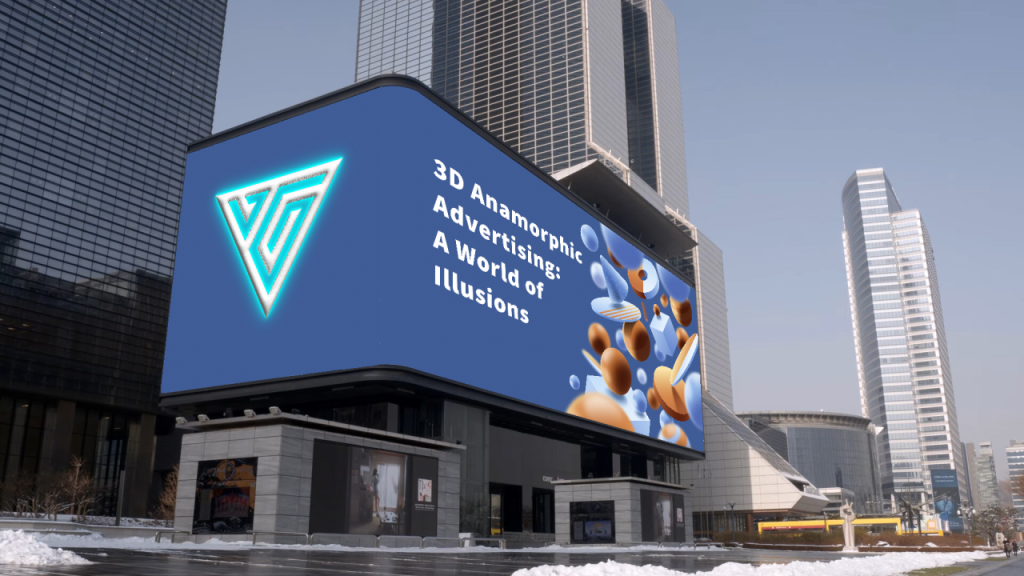
Location selection is the backbone of anamorphic advertising. Not every DOOH screen can support forced perspective visuals. Corner screens, curved LEDs, and junction-facing billboards work best. Moreover, the viewer’s primary sightline must be predictable. Therefore, brands should prioritise high-traffic intersections, signal-free corridors, and premium commercial zones where viewing angles remain consistent. A strong location amplifies even a simple creative idea.
Design for the Eye, Not Just the Screen
Anamorphic content must be designed for the human eye, not merely for screen dimensions. Creative teams should map exact viewing angles, distance, and height before designing visuals. As a result, the illusion appears natural and immersive rather than distorted. Additionally, keeping the core message readable within the first few seconds is essential, especially in fast-moving traffic environments.
Keep the Story Simple and Visually Powerful
Simplicity drives impact in 3D billboard storytelling. Brands should avoid cluttered narratives or excessive copy. Instead, one strong visual idea executed brilliantly delivers maximum recall. For example, showcasing a product emerging from the screen or interacting with the cityscape often works better than complex storylines. Therefore, minimalism combined with scale creates stronger visual memory.
Use Motion Strategically to Control Attention
Motion is a powerful tool in anamorphic content, but overuse can reduce clarity. Brands should use motion to guide the viewer’s eye toward the key message or product. Slow, deliberate movements often feel more premium and believable than fast animations. Consequently, controlled motion enhances realism and prevents visual fatigue.
Plan Content Loops for Repeated Exposure
Most DOOH screens run content in loops. Brands should design anamorphic visuals that remain engaging even after repeated viewing. Creating micro-moments within a loop—such as subtle changes or layered animations—keeps commuters interested. As a result, repeat viewers notice new details, strengthening recall over time.
Integrate Social-First Thinking into Outdoor Planning
One of the biggest advantages of anamorphic billboards is social shareability. Brands should plan campaigns with mobile cameras in mind. Clear sightlines, dramatic angles, and photogenic moments encourage user-generated content. Therefore, anamorphic campaigns should be treated as both outdoor and digital assets. This dual planning significantly extends campaign reach without additional media spend.
Align Media Duration with Creative Impact
Unlike static hoardings that rely on long-term exposure, anamorphic campaigns often deliver strong results in shorter durations. A well-executed 7–14 day burst can generate massive buzz. Hence, brands should balance duration with intensity rather than defaulting to long schedules. Short, high-impact bursts are especially effective for launches and festive moments.
Budget for Quality, Not Just Screen Time
Anamorphic campaigns require higher upfront creative and production investment. However, cutting corners on content quality can dilute impact. Brands should prioritise creative excellence, precise rendering, and realistic animation. Consequently, a single premium execution often outperforms multiple average ones. From an ROI perspective, quality attention matters more than raw impressions.
Collaborate Early with Media and Creative Teams
Successful anamorphic campaigns emerge from early collaboration between media planners, creative teams, and technical vendors. When these teams work in silos, forced perspective often fails. Therefore, joint planning ensures the creative fits the screen, the location supports the illusion, and the media schedule maximises visibility.
Measure Success Beyond Impressions
Traditional OOH metrics like impressions do not fully capture anamorphic impact. Brands should track dwell time, social mentions, video shares, and brand lift indicators. Additionally, monitoring organic reach on social platforms provides insight into amplification value. Thus, success measurement should reflect attention quality, not just exposure volume.
Future-Proof Campaigns with Dynamic Anamorphic Content
As DOOH evolves, brands can integrate real-time triggers into anamorphic visuals. Weather-based changes, time-of-day adaptations, or event-driven updates add relevance. Therefore, planning flexible creative frameworks helps brands stay dynamic and context-aware, further boosting engagement.
Conclusion: Turning Visual Spectacle into Strategic Advantage
High-impact 3D billboard campaigns are not accidental; they are carefully planned. By aligning objectives, location, creative simplicity, motion control, and social amplification, brands can unlock the true power of anamorphic content. In India’s attention-scarce urban markets, well-planned 3D billboard campaigns deliver more than visibility—they create memorable brand moments that travel far beyond the street.