
Outdoor advertising has always relied on scale, repetition, and location to capture attention. However, modern urban audiences are exposed to thousands of visual messages daily. As a result, traditional OOH formats like static hoardings, posters, and vinyl billboards often blend into the background. This growing attention fatigue has pushed brands to explore disruptive formats. Consequently, anamorphic 3D billboards have emerged as a powerful solution to break visual clutter and command genuine attention.
Understanding Anamorphic 3D Billboards
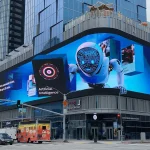
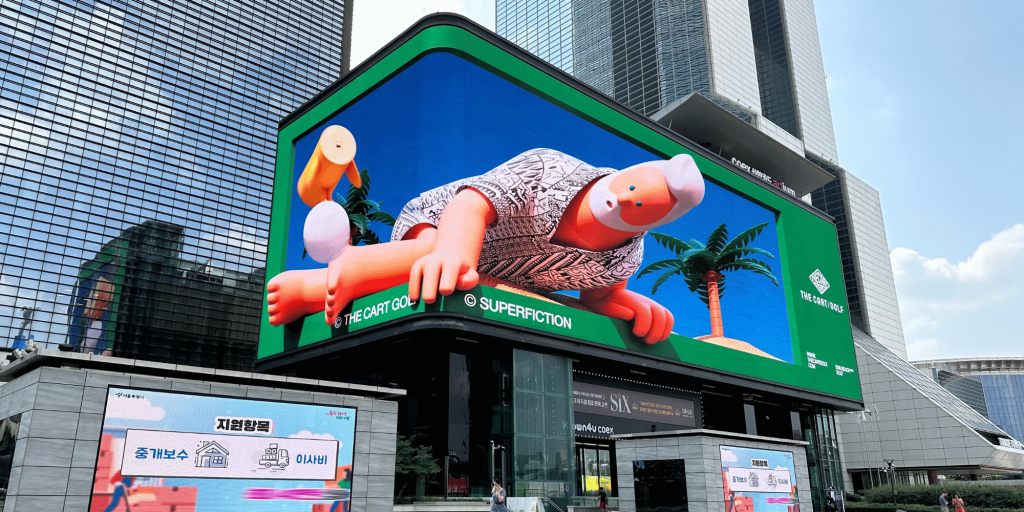
Anamorphic 3D billboards use forced perspective visuals designed for a specific viewing angle. When viewed from the correct position, the content appears three-dimensional and hyper-realistic. Unlike regular DOOH screens, these billboards create an illusion of depth, motion, and scale. Therefore, they instantly stand out in high-traffic urban environments. More importantly, the human brain is naturally drawn to depth and movement, which gives anamorphic formats a psychological advantage.
Why Traditional OOH Formats Struggle for Attention
Traditional OOH formats depend heavily on size and placement. However, commuters have learned to subconsciously ignore static visuals over time. Moreover, repeated exposure without novelty reduces recall. Even large hoardings often fail to engage because they do not interrupt routine visual patterns. As a result, attention spans for static OOH are shrinking. This is precisely where anamorphic 3D billboards outperform conventional formats.
Visual Disruption: The Biggest Attention Driver
Anamorphic 3D billboards disrupt the visual environment instantly. Because the content appears to extend beyond the physical screen, people instinctively stop, look, and process the visual. In contrast, traditional OOH relies on passive viewing. Furthermore, 3D visuals trigger curiosity, which leads to longer dwell time. Therefore, attention is not just captured but sustained.
Depth, Motion, and Realism Increase Cognitive Engagement
Human vision is wired to respond to depth and movement. Anamorphic advertising uses this natural instinct effectively. While static hoardings remain flat and predictable, 3D billboards simulate real-world physics. As a result, viewers experience higher cognitive engagement. Additionally, motion-based 3D elements help messages register faster, even in high-speed traffic zones.
Higher Stopping Power in High-Traffic Locations
Busy intersections, flyovers, and commercial hubs are prime OOH locations. However, these areas are also visually chaotic. Traditional billboards often get lost among signage, buildings, and traffic signals. On the other hand, anamorphic 3D billboards create a moment of pause. People slow down, take photos, and even record videos. Consequently, these billboards deliver unmatched stopping power.
Social Media Amplification Extends Attention Beyond the Street
One of the biggest advantages of anamorphic 3D billboards is their shareability. Viewers frequently capture videos and share them on social media platforms. Therefore, the attention generated extends far beyond the physical location. Traditional OOH formats rarely achieve this organic amplification. As a result, anamorphic campaigns deliver both outdoor impact and digital reach simultaneously.
Better Brand Recall Compared to Traditional OOH
Attention directly influences memory. Because anamorphic 3D billboards offer a unique visual experience, they significantly improve brand recall. In contrast, traditional hoardings often rely on repeated exposure for memory retention. Moreover, memorable experiences are recalled longer than repetitive visuals. Hence, brands using anamorphic formats enjoy stronger top-of-mind awareness.
Perceived Innovation Enhances Brand Image
Brands advertising on anamorphic 3D billboards are often perceived as innovative and premium. This perception directly impacts consumer trust and aspiration. Traditional OOH formats, while effective for reach, rarely signal innovation. Therefore, anamorphic advertising not only captures attention but also elevates brand positioning.
Efficiency Despite Higher Production Costs
Although anamorphic 3D billboards involve higher creative and production costs, their attention efficiency is significantly better. One high-impact 3D installation can outperform multiple static hoardings in terms of engagement. Additionally, when social amplification is considered, the cost per attention becomes highly competitive. Thus, brands achieve better ROI through quality attention rather than sheer volume.
Future of Attention-Driven OOH Advertising
As Indian cities adopt advanced DOOH infrastructure, anamorphic 3D billboards will become more accessible. Furthermore, integration with programmatic triggers, real-time content, and AI-generated visuals will enhance relevance. Therefore, attention-driven OOH formats are set to replace visibility-driven strategies. In this evolving landscape, traditional OOH will coexist, but premium attention will belong to anamorphic experiences.