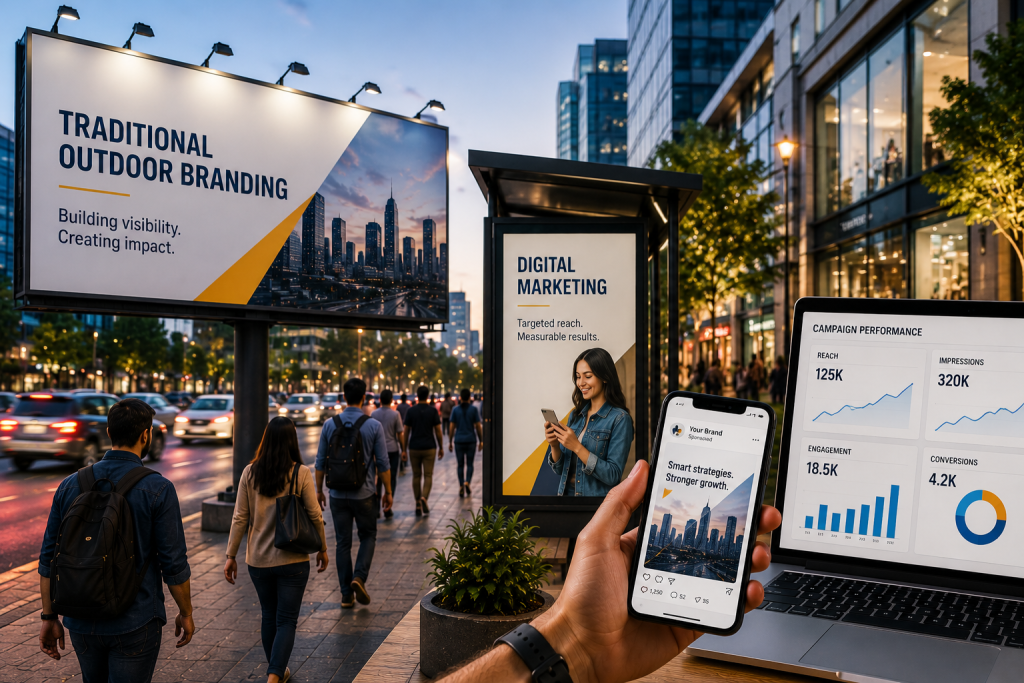

In today’s rapidly evolving advertising environment, brands are constantly searching for the most effective ways to connect with consumers. Traditional outdoor branding and digital marketing are often viewed as competing strategies, but the reality is that both offer unique advantages. The most successful campaigns in 2026 are not choosing one over the other—they are integrating both to create a seamless customer experience.
This innovative OOH campaign demonstrates how physical advertising can complement digital efforts, ensuring that brands remain visible, memorable, and relevant across multiple consumer touchpoints.
The Strengths of Traditional Outdoor Branding
Outdoor branding continues to be one of the most powerful advertising mediums because it provides consistent visibility. Billboards, transit advertising, retail branding, and large-format displays place brands directly in front of consumers during their daily routines.
Unlike digital advertisements that can be skipped, blocked, or ignored, outdoor advertising delivers unavoidable exposure. Consumers encounter these messages while commuting, shopping, and engaging with their local environment. This repeated visibility strengthens brand recognition and builds trust over time.
Another major advantage is credibility. Physical advertising often creates a perception of stability and legitimacy, helping brands establish a stronger presence within their target markets.
The Advantages of Digital Marketing
Digital marketing offers capabilities that traditional media cannot easily match. Through social media, search engines, video platforms, and display advertising, brands can target specific audiences based on demographics, interests, and behavior.
Digital campaigns also provide measurable performance data. Marketers can track clicks, conversions, engagement rates, and customer journeys in real time, allowing them to optimize campaigns quickly and efficiently.
Furthermore, digital platforms enable direct interaction with consumers through comments, messages, and personalized content, creating stronger relationships and improving customer engagement.
Why Integration Delivers Better Results
The most effective marketing strategies leverage the strengths of both channels. Outdoor branding generates awareness and broad reach, while digital marketing reinforces messages and encourages action. When consumers see a brand in both physical and digital spaces, recall increases significantly.
For example, a consumer may notice a striking billboard during their commute and later encounter the same brand on social media. This multi-channel exposure creates familiarity and improves the likelihood of conversion.
Modern OOH campaigns are increasingly incorporating QR codes, social media integrations, and interactive technologies to bridge the gap between offline and online engagement.
Finding the Perfect Balance
Brands no longer need to choose between traditional and digital advertising. Instead, they should focus on creating a balanced strategy that combines visibility, engagement, and measurable results. Outdoor branding provides scale and credibility, while digital marketing delivers precision and interaction.