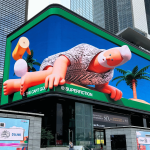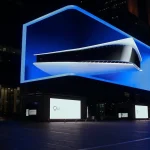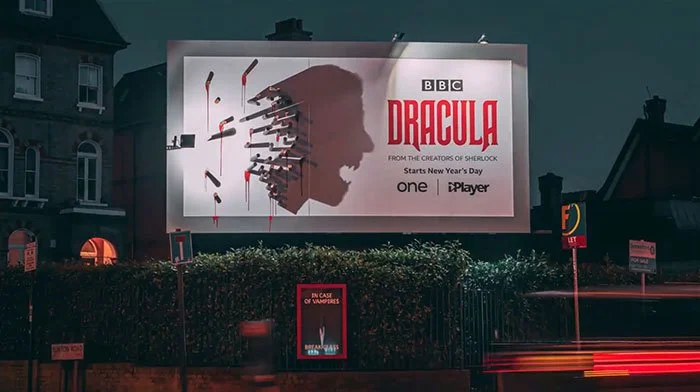

Anamorphic content has redefined how brands use large-format LED screens for outdoor storytelling. When executed correctly, anamorphic visuals create powerful 3D illusions that stop traffic, generate social buzz, and elevate brand perception. However, the same format can fail if creative fundamentals are ignored. Unlike standard DOOH creatives, anamorphic content demands precision, restraint, and a strong understanding of spatial design.
This article outlines the creative do’s and don’ts in anamorphic content production for large-format screens, helping brands and creative teams avoid common mistakes while maximising impact.
Why Anamorphic Content Needs a Different Creative Mindset
Anamorphic content is not simply 3D animation placed on a large screen. Instead, it is a perspective-based illusion designed for a specific viewing angle. Because of this, creative decisions are guided by technical rules rather than pure artistic instinct.
As a result, success depends on respecting perspective geometry, audience positioning, and real-world architecture from the very beginning.
Creative Do’s in Anamorphic Content Production
Start with the Viewing Angle, Not the Idea
Every anamorphic project must begin by identifying the primary viewing point. Once the camera angle is locked, all creative decisions should align with it. When this approach is followed, the illusion feels natural and convincing.
If the idea comes first and the angle is forced later, distortion becomes visible and the illusion weakens.
Design Specifically for Screen Dimensions
Large-format LED screens vary in width, height, curvature, and corner placement. Therefore, anamorphic creatives must be custom-built for each screen rather than reused across locations.
When content interacts with screen edges, corners, and depth, the illusion becomes far more immersive.
Use Depth Sparingly but Purposefully
Strong anamorphic content focuses on one or two key depth moments rather than continuous pop-outs. This approach allows viewers to process the illusion comfortably.
Moreover, intentional depth placement ensures the hero element, whether a product or brand symbol, receives maximum attention.
Align Motion with Real-World Physics
Movement should feel believable and grounded. Objects must accelerate, decelerate, and interact with space in a realistic manner. Consequently, the illusion feels more natural to the human eye.
In many cases, subtle motion delivers better results than exaggerated animation, especially on large-format screens viewed from a distance.
Keep the Story Simple and Focused
Anamorphic content works best when the message is instantly clear. Since viewers may only glance for a few seconds, storytelling should be visual, linear, and easy to understand.
Often, a single strong narrative moment delivers more impact than multiple complex scenes.
Creative Don’ts in Anamorphic Content Production
Do Not Repurpose Standard 2D or 3D Content
One of the most common mistakes is adapting existing creatives into anamorphic formats. Since anamorphic content relies on intentional distortion, repurposed assets almost always appear flat or broken.
Anamorphic storytelling requires content designed from scratch.
Do Not Overcrowd the Screen
Too many visual elements reduce depth clarity. When multiple objects compete for attention, the illusion becomes confusing rather than impressive. Fewer elements with a clear spatial hierarchy create a stronger visual impact.
Do Not Ignore Architectural Context
Large-format screens exist within real environments. Ignoring surrounding buildings, roads, or pedestrian sightlines weakens the illusion significantly.
When content aligns with architectural lines and viewing angles, the illusion feels integrated into the cityscape.
Do Not Overuse Text or Callouts
Excessive text breaks immersion. Flat typography immediately reminds viewers they are looking at an advertisement.
If text is necessary, it should be minimal, bold, and integrated into the 3D space instead of overlaid.
Do Not Skip Real-World Testing and Calibration
What looks perfect in a studio environment may behave differently outdoors due to brightness, contrast, and viewing distance. Skipping on-site testing often compromises final output.
Small adjustments during live calibration can dramatically improve illusion quality.
Balancing Creativity with Technical Discipline
Anamorphic content production sits at the intersection of creativity and precision. While technical constraints may feel limiting, they actually guide better storytelling outcomes. By respecting perspective rules, creative teams unlock visuals that feel magical rather than forced.
Additionally, close collaboration between creative artists, technical engineers, and media planners ensures smoother execution and stronger results.
Why Brands That Follow These Principles Perform Better
Brands that follow these creative principles consistently achieve higher dwell time, stronger recall, increased social sharing, and a premium brand image. Because anamorphic content is still relatively new, execution quality directly influences audience trust and perception.
Poorly executed illusions reduce credibility, while well-crafted visuals elevate brand authority.
Conclusion: Precision Creates Impact
Anamorphic content is powerful only when handled with discipline. By following the right creative practices and avoiding common mistakes, brands can transform large-format screens into unforgettable storytelling platforms.
In immersive outdoor advertising, illusion is not about excess. It is about precision.