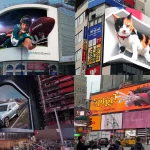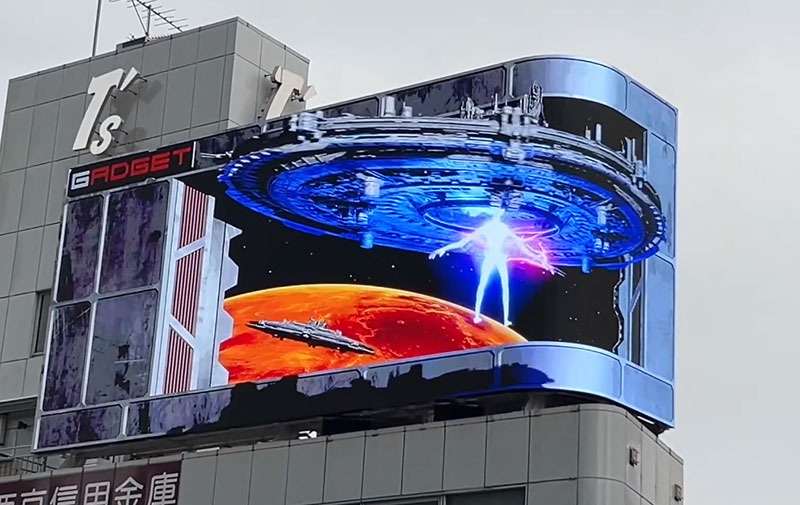

3D billboard advertising, especially using anamorphic content, represents a premium evolution of outdoor media. While the visual impact is undeniable, success depends on more than creativity alone. Cost management, production precision, and smart media planning play a decisive role in determining campaign effectiveness. Therefore, brands must approach 3D billboard advertising as a strategic investment rather than a one-off spectacle. In India’s rapidly maturing DOOH ecosystem, informed planning ensures both impact and efficiency.
Understanding the Cost Structure of 3D Billboard Advertising
The cost of 3D billboard advertising is typically higher than traditional static OOH. However, this cost is distributed across multiple components. Firstly, there is media inventory cost, which depends on city, location, screen size, and duration. Prime junctions and premium LED screens command higher rates. Secondly, creative and production costs include 3D modeling, animation, rendering, and technical adaptation for forced perspective. Finally, operational and testing costs cover screen calibration, trial runs, and on-ground coordination. Therefore, brands should evaluate cost holistically rather than comparing it directly with static hoardings.
Creative and Production Costs: Where Quality Matters Most
Production is the backbone of anamorphic advertising. Unlike standard DOOH creatives, anamorphic content requires specialised 3D artists, motion designers, and technical mapping. Every visual must be designed according to the exact viewing angle and screen geometry. As a result, production timelines are longer and demand closer collaboration. Cutting corners at this stage often leads to distorted visuals and reduced impact. Hence, brands should allocate sufficient budget to ensure realism, smooth motion, and visual clarity.
Screen Type and Infrastructure Considerations
Not all digital screens are suitable for 3D anamorphic content. Corner screens, curved LED displays, and large-format junction-facing billboards work best. Additionally, screen resolution, brightness, and refresh rates influence the final output. Lower-quality screens may flatten the 3D effect. Therefore, media planners must assess infrastructure compatibility before committing budgets. This technical evaluation prevents costly mismatches between creative ambition and media reality.
Media Planning: Location Is More Important Than Volume
In 3D billboard advertising, one premium location often outperforms multiple average ones. Media planning should prioritise predictable sightlines, high dwell time, and minimal visual clutter. Busy intersections, traffic signals, and commercial hubs deliver the best results. Moreover, the direction of traffic flow and pedestrian movement must align with the forced perspective angle. Consequently, careful location selection maximises attention without requiring excessive screen count.
Duration Planning: Short Bursts vs Long Campaigns
Unlike static billboards that benefit from long-term repetition, 3D billboard campaigns perform exceptionally well in short, high-intensity bursts. A 7 to 14-day campaign can generate significant buzz, recall, and social amplification. Extending duration without creative variation may lead to diminishing returns. Therefore, brands should match campaign length with objectives such as launches, festive promotions, or announcements.
Content Looping and Frequency Considerations
Most DOOH screens operate on content loops shared by multiple advertisers. For anamorphic campaigns, loop duration and frequency directly affect impact. Brands should ensure their creative appears frequently enough to capture repeat exposure. Additionally, designing loops that remain engaging over time prevents fatigue. Hence, both media frequency and creative structure must be planned together.
Integrating 3D Billboards into the Wider Media Mix
3D billboard advertising should not operate in isolation. Its true value emerges when integrated into a broader media plan. Brands can align outdoor launches with digital, social, PR, and influencer activity. As a result, the anamorphic billboard becomes the anchor moment of the campaign. This integration improves overall ROI and ensures message consistency across platforms.
Measuring ROI Beyond Traditional Metrics
Traditional OOH metrics like impressions and reach fail to capture the full value of 3D billboard advertising. Brands should track dwell time, video shares, social mentions, and earned media value. Additionally, brand lift studies and recall surveys provide deeper insights into effectiveness. Therefore, success measurement must focus on attention quality rather than exposure quantity.
Budget Optimisation Strategies for Indian Brands
For brands entering 3D billboard advertising for the first time, pilot campaigns are a smart approach. Starting with one high-impact location helps test creative effectiveness and audience response. Over time, learnings can be scaled across cities. Moreover, reusing or adapting 3D assets across formats improves cost efficiency. Thus, smart budgeting balances experimentation with scalability.
Production Timelines and Coordination
Anamorphic campaigns require longer lead times than traditional OOH. From concept finalisation to screen testing, timelines can range from three to six weeks. Early coordination between media owners, creative teams, and technical vendors is essential. Without this alignment, last-minute changes can increase costs or compromise quality. Therefore, timeline planning is as important as budget planning.
Conclusion: Balancing Cost with Impact in 3D Billboard Advertising
3D billboard advertising offers unmatched visual impact, but it demands disciplined planning. By understanding cost components, investing in quality production, selecting the right locations, and aligning media strategy with objectives, brands can maximise returns. In India’s evolving DOOH landscape, those who treat anamorphic advertising as a strategic medium—not just a creative experiment—will achieve the strongest results.