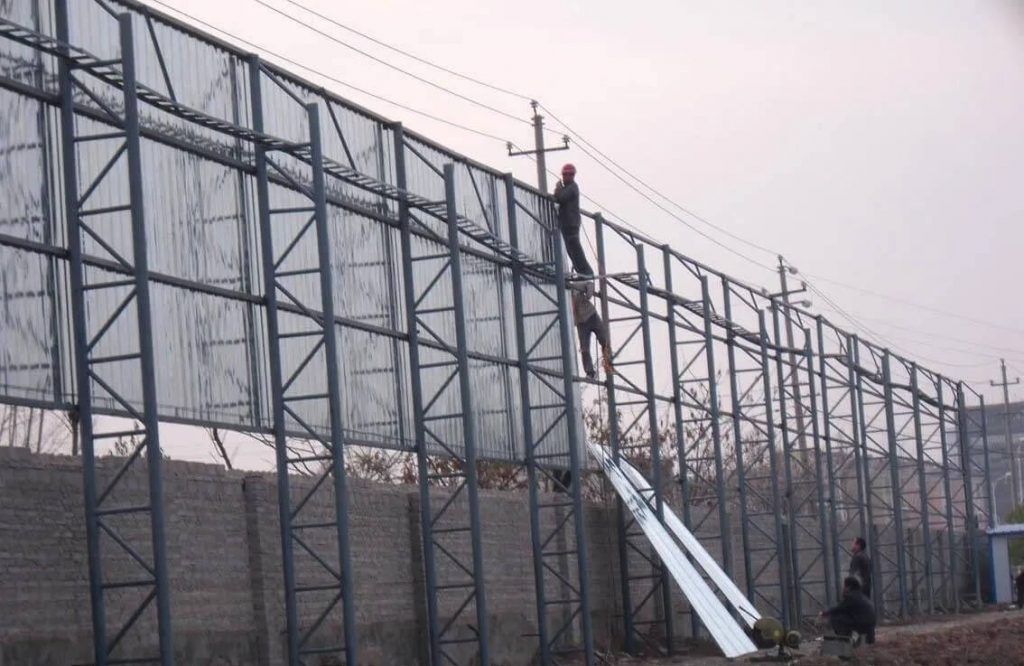

For advertising companies operating in the out-of-home (OOH) space, hoardings are not just media assets—they are long-term revenue structures. While media planning and site selection are important, the choice of hoarding fabrication partner has a direct impact on safety, compliance, lifespan, and return on investment (ROI). A wrong fabrication decision can lead to frequent breakdowns, regulatory issues, and advertiser dissatisfaction.
Therefore, selecting the right hoarding fabrication partner requires a structured evaluation. This article provides a practical checklist that advertising companies can use to make informed, risk-free fabrication decisions.
Why Choosing the Right Hoarding Fabrication Partner Matters
Hoarding structures operate in harsh outdoor conditions. They face wind pressure, rain, heat, dust, and continuous exposure over several years. As a result, fabrication quality directly influences operational stability and commercial viability.
Moreover, authorities are increasingly strict about structural safety and compliance. Consequently, advertising companies are held accountable not only for media delivery but also for public safety. Choosing a reliable fabrication partner therefore becomes a strategic decision rather than a procurement formality.
Checklist 1: Proven Experience in Hoarding Fabrication
Firstly, evaluate the fabricator’s experience with outdoor hoardings and unipoles. Fabricators who primarily work on small signage may not understand the engineering complexity of large-format OOH structures.
Ask for:
-
Past projects involving highways, flyovers, or arterial roads
-
Experience with unipoles, gantries, cantilevers, and rooftop hoardings
-
Ability to handle large-scale or multi-city fabrication orders
Experience ensures that the fabricator anticipates challenges rather than reacting to failures.
Checklist 2: Structural Design and Engineering Capability
A strong fabrication partner should offer engineering-backed designs, not just metal structures. This includes wind-load calculations, foundation depth planning, and load-bearing assessments.
Ensure the partner:
-
Provides structural drawings and design calculations
-
Follows standard safety and engineering practices
-
Designs structures suitable for local wind and traffic conditions
Because safety failures often originate at the design stage, this checklist item is critical.
Checklist 3: Material Quality and Surface Treatment
Material selection determines how long a hoarding will last. Therefore, advertising companies must verify the quality of steel, fasteners, and coatings used in fabrication.
Check for:
-
Use of standard-grade MS or galvanized steel
-
Anti-rust primers and weather-resistant paint systems
-
Quality of bolts, base plates, and welding joints
High-quality materials reduce corrosion, deformation, and long-term maintenance costs.
Checklist 4: Compliance Knowledge and Documentation Support
Compliance is no longer optional in OOH advertising. A reliable fabrication partner understands local regulations and supports approval processes.
Confirm whether the fabricator:
-
Is familiar with municipal and highway authority norms
-
Provides stability certificates and technical documentation
-
Builds structures as per approved sizes and formats
A compliance-ready partner reduces the risk of removals, penalties, and campaign disruptions.
Checklist 5: Installation Standards and Site Execution
Fabrication quality loses value if installation is poorly executed. Therefore, assess how the partner handles on-ground erection and installation.
Evaluate:
-
Foundation excavation and concrete quality
-
Alignment accuracy and vertical stability
-
Safety practices during installation
Proper installation ensures that the fabricated structure performs exactly as designed.
Checklist 6: Maintenance, Warranty, and After-Sales Support
Outdoor hoardings require periodic inspections and occasional repairs. A strong fabrication partner offers post-installation support, which protects long-term ROI.
Look for:
-
Clear warranty on fabrication and structure
-
Availability for maintenance or reinforcement work
-
Ability to modify or relocate structures if required
Ongoing support reduces downtime and keeps inventory monetizable.
Checklist 7: Scalability and Turnaround Time
Advertising companies often work on tight timelines and large inventories. Therefore, the fabrication partner must be capable of scaling operations without compromising quality.
Assess:
-
Fabrication yard capacity and machinery
-
Skilled workforce availability
-
Track record of on-time project delivery
Scalability ensures that campaign expansion does not create execution bottlenecks.
Checklist 8: Transparency in Costing and Deliverables
Finally, clarity in pricing and scope is essential. A reliable fabrication partner provides transparent quotations with clearly defined deliverables.
Ensure the quotation specifies:
-
Material specifications and thickness
-
Fabrication, transport, and installation scope
-
Maintenance or warranty terms
Transparent costing prevents disputes and unexpected expenses later.
Why a Checklist-Based Approach Works
Using a checklist-based approach allows advertising companies to evaluate fabrication partners objectively. Instead of choosing based on lowest cost, companies can assess long-term value, safety, and ROI.
Moreover, a structured evaluation builds stronger vendor relationships and ensures consistency across multiple hoarding sites.
Conclusion
Choosing the right hoarding fabrication partner is one of the most important decisions an advertising company makes in the OOH ecosystem. Quality fabrication protects assets, ensures compliance, reduces maintenance costs, and enhances advertiser confidence.
By following this checklist, advertising companies can minimize risk and maximize the commercial life of their hoarding inventory. In outdoor advertising, strong structures build stronger returns.