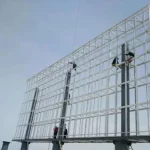

Billboards remain one of the most powerful tools in outdoor advertising. However, for media owners and advertisers, understanding how to manufacture a billboard is essential before investing in large-format outdoor assets. Billboard manufacturing is not just about steel and flex. Instead, it is a structured process involving engineering, fabrication, safety compliance, and precise installation.
This complete guide for media owners and advertisers explains the billboard manufacturing process step by step, helping stakeholders make informed decisions, control costs, and ensure long-term safety.
Why Understanding Billboard Manufacturing Is Important
Billboards are permanent or semi-permanent structures exposed to wind, weather, pollution, and traffic vibrations. Therefore, improper manufacturing can lead to safety risks, legal issues, and financial loss.
Moreover, when media owners understand the manufacturing process, they can:
-
Evaluate fabrication vendors effectively
-
Ensure regulatory compliance
-
Improve asset lifespan and ROI
As a result, billboard manufacturing knowledge becomes a strategic advantage.
Step 1: Site Survey and Location Assessment
Every billboard manufacturing process begins with a detailed site survey. Engineers and execution teams study the proposed location before finalizing the structure design.
Key factors assessed include:
-
Road width and traffic direction
-
Visibility angles and viewing distance
-
Soil bearing capacity
-
Wind exposure and surrounding terrain
Consequently, site conditions directly influence structural design and cost.
Step 2: Structural Design and Engineering Planning
After site analysis, structural engineers design the billboard. This stage defines safety and durability.
Engineering work includes:
-
Wind load calculations
-
Height and surface area analysis
-
Structural member sizing
-
Foundation design
Therefore, no billboard should be fabricated without approved engineering drawings and calculations.
Step 3: Material Selection for Billboard Manufacturing
Material choice determines the strength and lifespan of a billboard. Most billboards use structural steel due to its load-bearing capability.
Common materials include:
-
Structural steel pipes or sections
-
Galvanized steel for corrosion resistance
-
High-tensile bolts and fasteners
Additionally, protective coatings such as galvanization and weather-resistant paints are planned at this stage.
Step 4: Fabrication of Billboard Structure
Fabrication takes place in a dedicated workshop. Steel components are cut, welded, and assembled as per engineering drawings.
Fabrication activities include:
-
Precision cutting using CNC or plasma machines
-
Welding of columns, frames, and bracing
-
Grinding and surface finishing
As a result, the billboard structure achieves the required strength and dimensional accuracy.
Step 5: Surface Treatment and Corrosion Protection
Before dispatch, fabricated components undergo surface treatment. This step protects the structure from rust and weather damage.
Common treatments include:
-
Sand blasting or shot blasting
-
Hot-dip galvanization or epoxy primer coating
-
Final paint finish
Therefore, surface protection significantly increases the billboard’s service life.
Step 6: Foundation Construction at Site
While fabrication continues, foundation work starts on-site. The foundation carries the entire load of the billboard.
Foundation construction involves:
-
Excavation as per design
-
Placement of reinforcement steel
-
Installation of anchor bolts
-
Concrete pouring and curing
As a result, a strong foundation ensures stability under wind and vibration loads.
Step 7: Transportation and Installation
Once fabrication and foundation curing are complete, components are transported to the site.
Installation includes:
-
Erection using cranes
-
Vertical alignment checks
-
Tightening of anchor bolts
-
Frame mounting at height
Therefore, installation accuracy is critical to long-term safety.
Step 8: Display Mounting and Finishing
After structural erection, the display material is installed. This may include flex sheets, metal sheets, or digital LED panels.
At this stage:
-
Lighting fixtures are installed
-
Electrical connections are tested
-
Final alignment is checked
Consequently, the billboard becomes ready for advertising use.
Step 9: Safety Inspection and Certification
Before commercial use, safety inspection is mandatory. Structural engineers inspect:
-
Weld quality
-
Bolt tightness
-
Foundation stability
-
Vertical alignment
After inspection, a structural stability certificate is issued. This confirms that the billboard complies with safety norms.
Types of Billboards Based on Manufacturing
Depending on location and requirement, billboards may include:
-
Unipole billboards
-
Gantry structures
-
Rooftop billboards
-
Wall-mounted hoardings
Each type follows the same core manufacturing steps but differs in design and foundation complexity.
Cost Considerations in Billboard Manufacturing
Billboard manufacturing cost depends on:
-
Height and size
-
Material quantity and steel rates
-
Foundation depth
-
Installation complexity
Therefore, cost estimation should always be site-specific.
Conclusion
Understanding how to manufacture a billboard: complete guide for media owners and advertisers helps stakeholders make safer, smarter, and more profitable decisions. From site survey and engineering to fabrication, foundation, and certification, every step plays a vital role in ensuring visibility without compromising safety.
For media owners, a well-manufactured billboard is not just an advertising asset—it is long-term infrastructure. When manufacturing is done right, billboards stand tall, perform consistently, and deliver strong returns year after year.