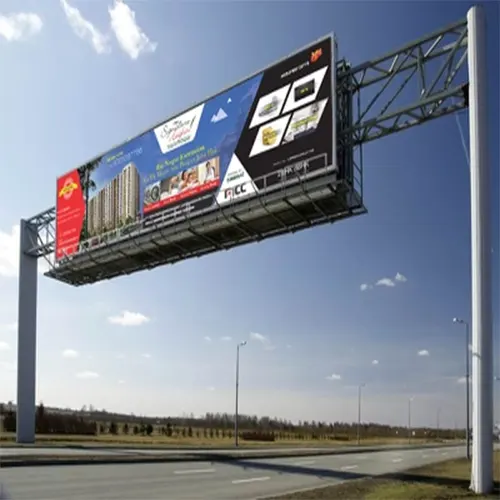

Highways and expressways are among the most demanding environments for outdoor advertising structures. High-speed winds, continuous vehicle movement, open terrain, and safety regulations make stability a non-negotiable factor. Therefore, understanding how unipole hoarding fabricators ensure stability on highways and expressways is crucial for media owners, advertisers, and infrastructure planners investing in large-format outdoor assets.
This article explains the engineering, fabrication, and installation measures used to keep unipole hoardings stable, safe, and long-lasting in high-speed corridors.
Why Stability Is Critical for Highway Unipole Hoardings
Unipole hoardings are tall, single-column structures. On highways and expressways, they face higher wind speeds and minimal obstructions. As a result, the entire load—wind pressure, display weight, and structural stress—acts on one central pole and foundation.
Therefore, even minor fabrication or installation errors can compromise safety. To prevent this, fabricators follow strict engineering-driven processes.
Detailed Site Survey and Environmental Assessment
Understanding Highway Conditions
Stability planning begins with a detailed site survey. Fabricators assess:
-
Open wind exposure zones
-
Traffic speed and vibration impact
-
Soil type and bearing capacity
-
Distance from carriageway and safety setbacks
Since highways lack wind buffers like buildings or trees, engineers consider worst-case wind scenarios. Consequently, designs are customized for each location.
Wind Load Analysis and Structural Engineering
Engineering for High-Speed Wind Zones
Wind load is the biggest threat to unipole stability on expressways. Fabricators work with structural engineers to calculate wind pressure based on height, surface area, and regional wind codes.
As a result:
-
Pole diameter and wall thickness are increased
-
Bracing systems are optimized
-
Load transfer to foundation is precisely calculated
This ensures that the unipole resists bending, vibration, and overturning forces during storms and high-speed airflow from moving vehicles.
High-Strength Material Selection for Stability
Why Material Choice Matters on Highways
Unipole hoarding fabricators use high-grade structural steel for highway installations. Thicker steel sections provide higher resistance to stress concentration at the base.
Additionally, materials are treated with:
-
Hot-dip galvanization
-
Anti-corrosion primers
-
Weather-resistant paint systems
Therefore, structural integrity is maintained even under long-term exposure to heat, rain, and pollution.
Deep and Heavy Foundation Engineering
Foundation: The Real Stability Anchor
The foundation plays the most critical role in unipole stability. On highways and expressways, foundations are designed to counter extreme overturning moments.
Fabricators ensure stability by:
-
Excavating deep foundations based on soil reports
-
Using reinforced cement concrete (RCC) with high steel content
-
Installing heavy-duty anchor bolts with precise alignment
-
Allowing adequate curing time before erection
As a result, the foundation absorbs wind-induced forces and prevents tilting or settlement.
Precision Fabrication and Quality-Controlled Welding
Why Fabrication Accuracy Is Non-Negotiable
Since a unipole relies on a single column, fabrication precision is critical. Fabricators use:
-
CNC or plasma cutting for accuracy
-
Full-penetration welding for joints
-
Controlled welding sequences to avoid distortion
Each weld is inspected for strength and uniformity. Consequently, the pole behaves as a single, continuous structural element under load.
Controlled Transportation and Safe Erection Process
Installation Challenges on Expressways
Transporting and erecting unipole hoardings on highways requires careful planning. Fabricators coordinate with traffic authorities and use high-capacity cranes.
Stability during installation is ensured by:
-
Vertical alignment checks using leveling instruments
-
Gradual load transfer to anchor bolts
-
Torque-controlled tightening of fasteners
Therefore, the structure achieves perfect verticality and load balance.
Optimized Display Frame and Wind-Reduction Design
Reducing Wind Resistance at Height
Fabricators design display frames to reduce wind pressure. Techniques include:
-
Lightweight yet rigid frame designs
-
Open-back or ventilated structures
-
Proper spacing of display panels
As a result, wind passes through or around the hoarding, reducing stress on the pole.
Post-Installation Safety Checks and Maintenance Planning
Ensuring Long-Term Stability
After installation, fabricators conduct stability and safety inspections. These include:
-
Bolt and weld checks
-
Foundation settlement observation
-
Structural alignment verification
Many fabricators also recommend periodic inspections. Consequently, early signs of stress or corrosion are addressed before they become safety risks.
Conclusion
Understanding how unipole hoarding fabricators ensure stability on highways and expressways reveals the depth of engineering and execution behind these towering advertising structures. From wind load analysis and material selection to deep foundations and precision installation, every step is designed to handle extreme conditions.
For media owners and advertisers, choosing experienced unipole fabricators is not just about visibility—it is about safety, compliance, and long-term asset performance. On highways and expressways, stability is engineered, not assumed.